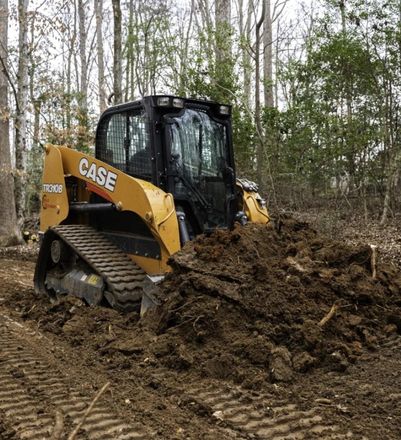
Every week I talk to homeowners and developers who lost time and money because their contractor showed up to a site that wasn't ready. Usually it's not anyone's fault - they just didn't know what "ready" actually means for construction. The sequence matters more than most people realize, and skipping a step or doing things out of order can cause real problems that cost more to fix than they would have cost to do right.
Here's how we approach land prep for construction at Superior - from raw land to a site your contractor can actually work on.
Step 1: Survey and Mark Before You Touch Anything
Before any equipment goes on the property, you need to know exactly where your property lines are, where any utilities run underground, and where you plan to build. This sounds obvious, but you'd be surprised how many projects skip this or do it informally.
Get a licensed surveyor to mark your corners if you don't already have pins. Call 811 to have utilities marked - this is required by law in South Carolina and takes a few days. Find out if your county requires a grading permit or an erosion control plan before work starts (Davidson and Williamson counties often do for larger disturbances).
South Carolina 811 Reminder: You're required to call 811 at least 3 business days before digging. Utilities mark for free. Hitting a buried line is expensive and dangerous - don't skip this.
Step 2: Clear the Land
Once you know where everything is, clearing comes first. This means removing all trees, stumps, brush, and existing vegetation from the build area - plus some buffer around it for equipment access and drainage work.
A few things to decide before clearing starts:
- What trees are you keeping? Mark them clearly before we arrive.
- Do you want the timber? If trees are valuable (white oak, walnut, cherry), we can separate them before processing. If not, we chip or haul.
- Do you need stumps and roots removed, or just cut flush? For construction, you want them fully dug out - root systems left in the ground will cause problems under a foundation or driveway.
- Is there any existing concrete, structures, or debris that needs demolition first?
On most residential build sites (1–3 acres), clearing takes one to two days. Larger parcels scale from there. The land should be completely clear of all woody material before you move to grading.
Step 3: Rough Grading
After clearing, rough grading shapes the land into something close to its final intended elevation - but not finished. This is where we move the bulk of the dirt: cutting high spots, filling low spots, and establishing the general slope that will direct water away from your building.
The biggest mistake at this stage is rushing it. Rough grade needs to account for:
- Final finished floor elevation of the structure
- Driveway grade and access
- Natural water drainage paths - where will rain go?
- Septic system location if applicable
- Future improvements (pond, outbuilding, barn)
Don't finalize the rough grade until you've talked to your contractor and, if needed, a civil engineer. Moving dirt after the fact is expensive. Moving it right during rough grade costs nothing extra.
Step 4: Drainage and Utilities
Before fine grading happens, drainage work and underground utilities go in. This includes:
- French drains or drainage swales if needed
- Culverts under any driveways
- Water and sewer lines (coordinated with your utility provider)
- Septic tank and drain field installation if you're on a well/septic system
Installing drainage after fine grading is done usually means tearing up finished work. Do it now while the ground is already disturbed and access is easy.
Step 5: Erosion Control
South Carolina gets real rain. If you're leaving disturbed soil exposed for any significant time before construction starts, you need erosion control measures - silt fence around the perimeter, straw on exposed slopes, and inlet protection on any drainage features. This isn't just a good idea; in most South Carolina counties it's required for disturbed areas over one acre.
TDEC Note: Projects disturbing more than one acre in South Carolina typically need a TPDES Construction General Permit. Your contractor may handle this, or it may fall on you as the property owner. Ask before you start.
Step 6: Fine Grading
Once underground work is complete and utilities are in, fine grading brings the surface to its final elevation with precise slopes. This is where your contractor needs the most accuracy - foundation pads need to be within a fraction of an inch, driveways need consistent grade, and any drainage swales need to flow correctly.
Don't cheap out on the person doing your fine grade. A few hundred dollars saved on an imprecise grade can result in thousands in drainage problems later.
Step 7: Compaction and Base Course
For areas that will support structures, driveways, or heavy equipment, the soil needs to be compacted. We typically use a plate compactor or roller to achieve the specified compaction percentage. For driveways, a base course of crushed stone goes in before the final surface material.
At this point, your general contractor should be able to access the site, begin foundation work, and you're off and running.
How Long Does All This Take?
For a typical 1–3 acre residential build site from raw wooded land to contractor-ready:
- Clearing: 1–2 days
- Rough grading: 1 day
- Drainage / utility coordination: 2–5 days (scheduling dependent)
- Fine grading and compaction: 1 day
Total wall-clock time is typically 1–3 weeks when you account for scheduling, inspections, and utility coordination. Start early - land prep always takes longer than people expect when they haven't done it before.
Questions Before You Start?
Call us. We'll answer land prep questions honestly regardless of whether you hire us. If you're in Upstate South Carolina and you're getting ready to start a project, that's what we're here for.